“On the night of either the 3d or the 4th of July, a body of one hundred negroes armed themselves in anticipation of a raid of the Ku-Klux, and stationed themselves about the old fortifications near the town [of Columbia].” These words were written in 1868, when the Ku-Klux Klan had waged a war on Unionists, former USCTs, Freedmen’s Bureau teachers and any black person in general. Many of the local black men, former soldiers among them, armed and organized to protect their community from the violent aggression of the Ku-Klux. So many of these men had joined the army to fight for freedom. They came home after surviving long marches, relentless battles and vicious prisons. No one knew how freedom would look, but the expectation was definitely freedom, not fear.
This was the fear filled freedom that Dick and Anna McKissack’s children and grandchildren were experiencing. Madison and Caroline McKissack sent their children to school, fully cognizant that the Ku-Klux was always a threat. Their bravery was inherited by their son Lex McKissack, who took their strength and taught school himself. Calvin McKissack and his family migrated to Kansas to escape the fear. Anna and Ella worked hard and nurtured their children through the uncertainty. They were all bathed in the hope and prayers of Dick and Anna and they pulled strength from them as they moved forward.
War ended and rebuilding began. Reconstruction gave way to Jim Crow. Lex and Ella’s children were raised in a black world separate from the white world. Ella’s youngest son, James “Jimmy” Stephenson was barely 3 years old when his father died in 1908. At twenty-years-old, Jimmy married sixteen-year-old Gladys Peppers and five months later, James Stephenson Jr. was born. Two years later a second son, John was added to the family. Jimmy and Gladys raised their young family in a community oppressed with racial tension. James Jr. had just had his seventh birthday when Cordie Cheek, a seventeen-year-old black boy was lynched, brutalized and murdered at the Maury County Courthouse. It is not a guess to know that the fear and anger within the black community was reaching a peak.
A daughter was born to Jimmy and Gladys in 1936, but by 1940 Jimmy and Gladys had separated. Jimmy had moved to Chicago and Gladys and the children were living with her mother, Hannah Peppers, and aunts in Happy Hallow, near Columbia. With the start of WWII Jimmy joined the US Army and one month later, his son sixteen-year-old James Jr “raised his age” and joined the US Navy. James served on the USS Prometheus, a mechanical repair ship. James was on the Prometheus boxing team, where he learned how to fight and he gained confidence.
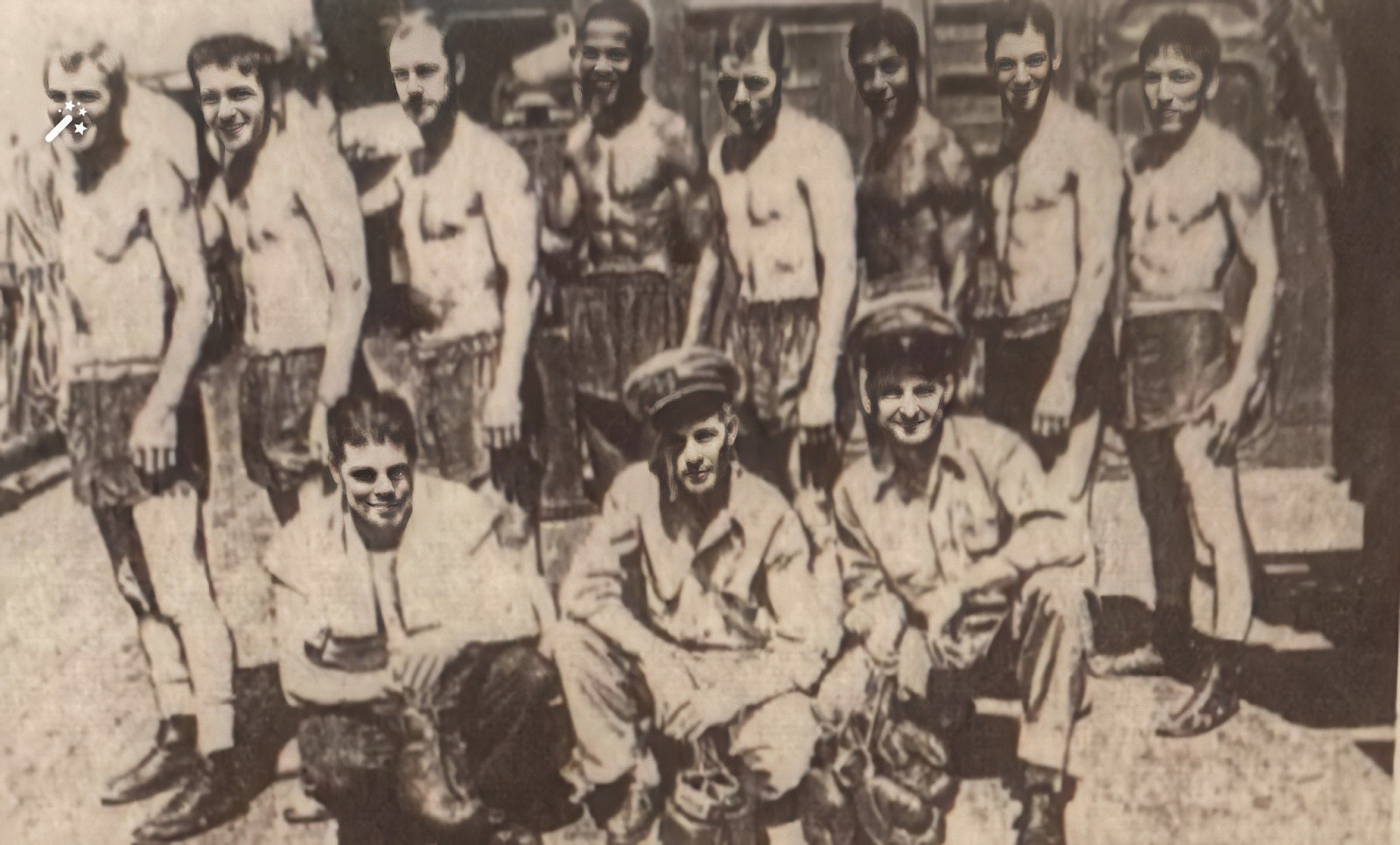
Prometheus Boxing Team, James is 3rd from right back row
(photo courtesy of Bridgett Stuart)
Upon his return to Tennessee after serving the US in WWII, Nineteen-year-old James accompanied his mother Gladys on an errand to pick up a radio that was being repaired. The white repairman, also a WWII veteran, was rude and physically abusive to Gladys. James stood up for his mother and before he knew it the white repairman was through the shop window and on the sidewalk. A fight in the street ensued, passersby joined in and the police came. As the police were hitting her son, Gladys was heard to say “You shouldn’t hit my boy before you find out!” The violence was then turned on her. Gladys and James were both arrested. Word got out that a white veteran had been attacked by a black man and a crowd of angry white citizens formed.
Hannah Peppers, Gladys’ mother, after hearing talk of a lynching party being organized went to Julius Blair for help. Blair was a prominent local businessman, he himself having been born at Rippa Villa in 1871. Julius had experienced the end of Reconstruction and the growth of Jim Crow. He had lived through decades of oppression and aggression. He had seen his business and other black business owners targeted by police, simply for being successful. He had seen lynchings and survived in a community held down by fear. Julius Blair made a decision that day to fight. He said “No more social lynchings.” He bailed the Stephensons out of jail and got them to safety.
On the night of of February 25,1946, the black community armed themselves in anticipation of a lynching by an angry white mob, many of them members of the Ku-Klux. They stationed themselves about the homes and businesses in Mink Slide, a black section of Columbia. Many of the local black men were soldiers who had recently returned from service in WWII. So many of these men had joined the military to fight for freedom. A freedom they had truly never experienced, but knew they had to fight for. They came home after surviving long marches, relentless battles and vicious prisons. These men came home to the same lack of freedom and social injustice they had known before the war, the difference was they now understood what freedom was supposed to be. They had put their lives on the line for it. A stand was made and a spark was lit in Maury County that night. This spark lit the fuse that fueled the Civil Rights movement.
 Finding Josie
Thank you for bringing to light another important event in history right here in Williamson and Maury County! To think this
incident was a spark, among many, that helped fuel the Civil Rights movement is amazing!
LikeLiked by 1 person